

From what we see, missed visits and patient no-shows mostly come from the gap between the booking and the day. Something changes in that gap, and the change doesn't reach the person who needs it. What fixes most of it is reminders people can actually reply to, a confirmation step, one place where every change lands and goes straight to the carer's phone, a same-day check on anything unconfirmed, and a follow-up for anyone who missed.
Two problems that come from the same place
If you run a clinic group, your version of this is a patient who doesn't turn up. The slot sits empty, the clinician waits, and someone on reception tries to ring them and gets voicemail.
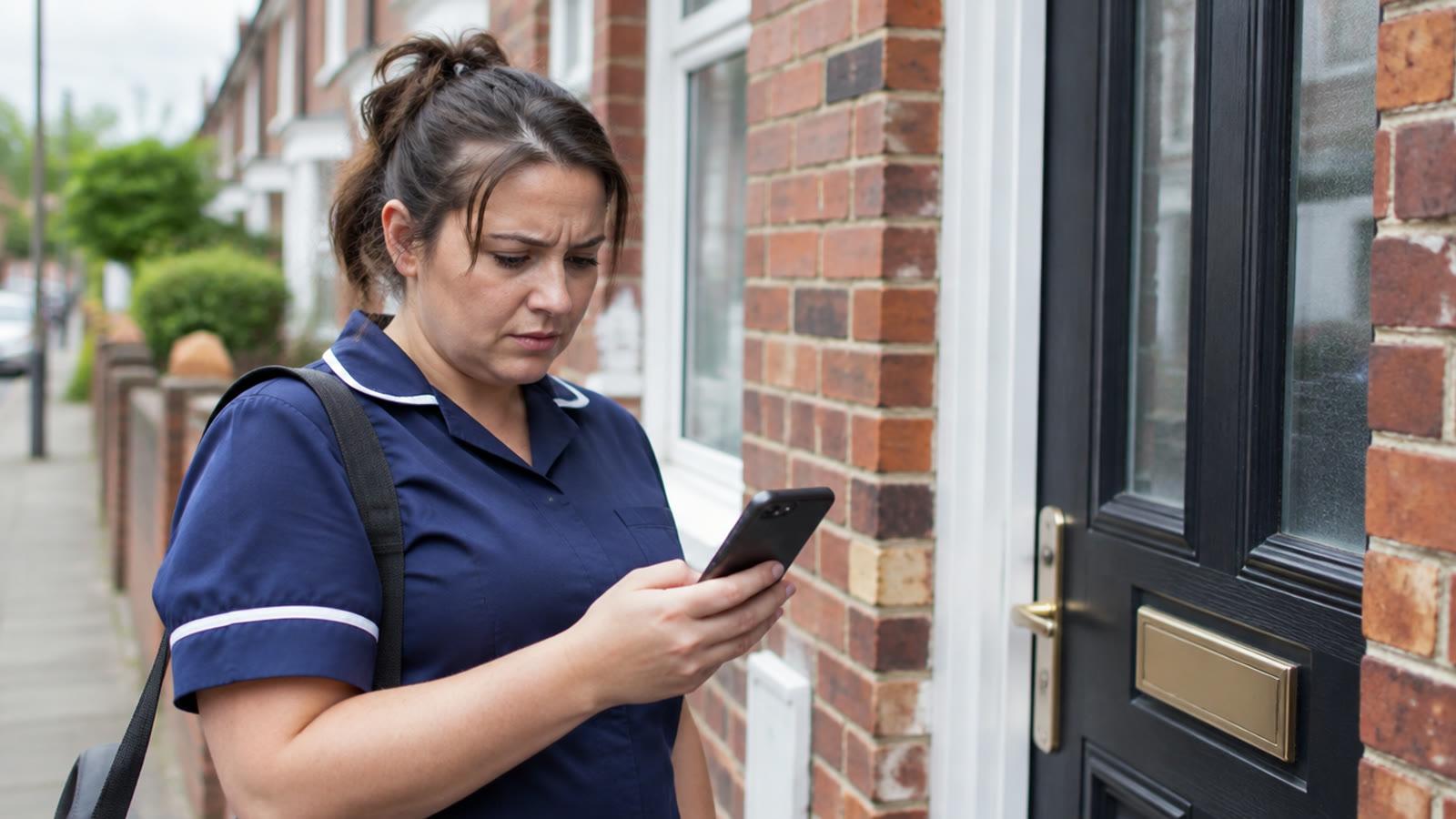
If you run home care, it's the other way round. The carer turns up and the client isn't in, because they went into hospital on Tuesday or the family cancelled with the office and nobody told the carer. Or the visit happens late, because the rota changed halfway through the round.
They look like different problems, but they come from the same thing, which is information that exists somewhere in the business but never gets to the person standing at the door or sitting in the clinic room.
Why it happens
The first thing is the gap. A patient books three weeks out, or a home care package runs on a standing weekly pattern, and the longer the gap, the more chance something has changed by the day.
And then the change goes to the wrong place. A daughter rings the branch to say her mum's been admitted, and whoever picks up writes it on a pad or puts it in the care system but not the rota. The carer's run for tomorrow still has the visit on it.
Then you've got reminders nobody can answer. A lot of the reminders we see are a text where the only reply it understands is STOP, so a patient who wants to move it has to ring, and they don't. Same in home care, where a family has no easy way to say "not this week".
The last one, and I'd say the biggest, is that nobody owns the follow-up. A missed patient goes in a list somewhere, and a carer at an empty house rings an office that's already busy. Nobody's job is to close the loop, so it doesn't get closed.
What it costs, with made-up numbers
These are made-up round numbers, so put your own in, but you get the point.
Say a home care branch does 1,000 visits a week, and 20 of those are wasted trips where the client isn't in or the visit was cancelled and the carer wasn't told. With travel, waiting and ringing the office, call it 45 minutes each, so 15 hours of carer time a week for one branch.
If you've got five branches, that's 75 hours. That's close to two full-time carers' worth of hours spent driving to empty homes.
Now say a clinic has 400 appointments a week and 30 patients don't turn up. If each slot is 20 minutes, that's 10 hours of clinician time a week with nobody in the chair, and across four clinics it's 40 hours. That's before the knock-on, because those patients still need seeing, so they rebook into slots someone else could have had.
The cost you don't see in those numbers is the late visits. When a carer loses 45 minutes at an empty house, the next three clients get their visit late.
What fixes it
So the first thing is reminders people can reply to. The patient or family gets a message the day before, and they can just write back "can we make it Thursday" or "she's in hospital", and that reply gets read and acted on. A reminder that can only be ignored doesn't help much.
Then there's a confirmation step. For clinics, that's asking the patient to confirm, and treating "no reply" as a flag rather than a yes. For home care, it can be a light check with clients or families where things change a lot, like after a hospital stay.
And then every change lands in one place. Whether it comes in by phone, text or email, it goes to the same record, and the rota updates, and the carer's phone updates. This is what we built Intake and Scheduling and dispatch around, so a call at 4pm about tomorrow's visit is on the carer's run before they leave the house.
Then a same-day check. Every morning, anything still unconfirmed shows up for a person to look at, so they ring the few that matter before the carer sets off or the clinician's day starts.
And last, a follow-up for anyone who missed. A patient who didn't turn up gets a message offering a new time. In home care, a missed or failed visit gets logged with a reason, and someone gets told to follow it up. Customer updates handles the messages, and the carer logs what happened on the Field app at the door.
| What's going wrong | What usually causes it | What fixes it |
|---|---|---|
| Patient doesn't turn up | Long gap, reminder they can't reply to | Two-way reminder the day before, confirm step |
| Carer finds an empty house | Change went to the office, not the rota | One place for changes, pushed to the carer's phone |
| Visit cancelled, carer not told | Message taken by phone and not passed on | Every call and message logged against the client |
| Late visits down the round | Time lost at a failed visit | Same-day check on unconfirmed visits |
| Missed visit never chased | Nobody owns the follow-up | Automatic follow-up with a named person on it |
We built something like this for domestic cleaning companies with Rota. Each cleaner gets their day on the phone, with access instructions and a checklist for each home, and they can report a problem from the visit. It works offline, and the owner sees what needs attention today. Home care is more serious than cleaning, but the shape of the problem is the same.
What should stay with a person
The software can send the messages, read the replies and flag what's missing. It shouldn't be making the calls that need judgement.
Anything clinical stays with a clinician. If a patient replies with symptoms, or asks whether they should still come in, that goes to a person, and the AI doesn't give advice.
Safeguarding is the same. If a carer finds something wrong at a visit, that goes straight to the registered manager, and it doesn't wait in a queue.
And a vulnerable client not answering is never just a no-reply. If someone who lives alone doesn't answer the door and isn't in hospital as far as you know, a person needs to act on that today. We wrote more on this in the decisions to keep human in AI workflows.
When it's not worth fixing with software
If you're one small clinic and a couple of patients miss each week, a receptionist ringing the day before is probably fine. Same if your home care rota rarely changes and your coordinators know every client.
It's also not worth it if the problem is capacity. If you're booking patients six weeks out because there are no slots, reminders won't fix that.
Where it's worth it is when you've got several branches, a lot of changes coming in through different people, and nobody can tell you how many wasted trips happened last week. If that's you, what to automate first in a service business is a good place to start, and you can see how it fits together on the Agentryx One platform and our healthcare page.
If you want us to look at it
Book a 30-minute call. We'll look at how your bookings, changes and rotas actually run across your branches, and show you what we'd hand over to AI first.