
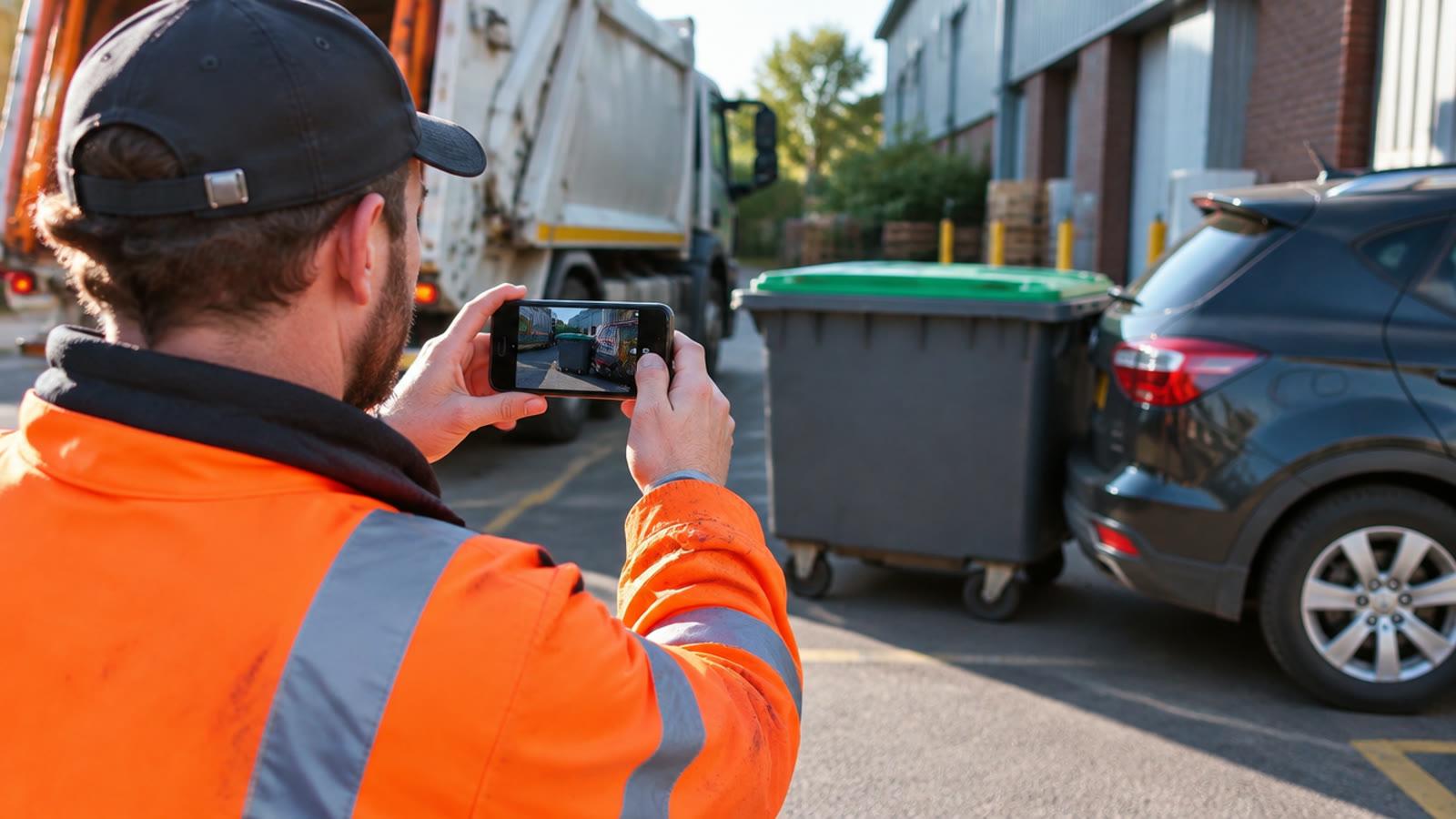
You cut missed collections and everything that comes after them by getting the crew to record why a lift didn't happen, with a photo and a location, at the stop. Once that record exists, the customer can be told straight away, "was my bin collected" gets answered without anyone digging, re-sends get booked inside your rules, and credits or extra charges only go out after a person has looked at the evidence.
Why collections get missed or disputed
If you sit down and go through a week of missed lifts one by one, they tend to fall into the same few reasons. Some of them are on you and some of them are on the customer, and the problem is that from the office they all look the same until someone works it out.
- Blocked access. A car parked across the gate, a locked compound, roadworks, a barrier nobody gave the crew the code for.
- Bin not out. The crew turned up and there was nothing at the collection point.
- Contamination. The crew opened it, saw the wrong waste in there and left it.
- Overfilled or overweight. The lid won't shut or the lift would go over the limit.
- The crew attended but can't prove it. The bin was emptied, the customer says it wasn't, and all you have is the driver's word.
- A round change didn't reach the crew. A new site was added, a day moved or a customer cancelled, and the sheet in the cab is from last week.
That last one is the one I'd look at first, because it's the only reason where the miss is fully yours and the customer has done nothing wrong.
What it ends up costing you
So the customer rings in, and then someone in the office has to find the round, call the driver or the depot, wait to hear back and ring the customer again. If it was your miss, a truck goes back out, which is a driver, fuel and a slot that was meant for something else. If nobody can prove what happened, a lot of teams just give the credit, because arguing costs more than the credit does.
And then the ticket for that job sits there waiting for the dispute to be sorted, so the invoice goes out late. Multiply that across every depot and you've got people whose whole week is basically missed collections.
Here's a worked example, and the numbers are made up and rounded. Say you've got 40 missed or disputed lifts a week across your depots. Each one takes around 20 minutes of office time between calls and chasing, which is a bit over 13 hours a week. Say 20 of them get a re-send at £60 a trip, that's £1,200, and 10 of them get a £25 credit with no evidence either way, that's another £250. That's close to £1,450 a week before you count the staff time, so somewhere around £75,000 a year. Rough numbers, but you get the point.
What we'd set up instead
So the first thing we do is get the reason recorded at the stop. In the field app, the crew picks the reason, takes a photo, and the time and location go on automatically. That's the bit everything else depends on.
Then the customer gets told straight away. With customer updates, the message goes out as soon as the crew logs it, with the reason, the photo if it helps, and the next date. A lot of the calls stop there, because the customer already knows.
Then for the ones who still ring or email, Intake picks it up. The AI looks at the record for that address and answers "was my bin collected" from what the crew logged. If a re-send is allowed under your rules, it books one through scheduling and dispatch. Anything outside the rules goes to a person with the record already attached.
Round changes go the other way. When the office adds a site or moves a day, it goes straight to the crew's phone, so nobody is working off an old sheet.
A person signs off anything that moves money. The AI can suggest a credit or a contamination charge, but someone on your team approves it, with the photo in front of them. Then in the back office, the ticket flows through to the invoice, so a clean job doesn't wait on a dispute it was never part of.
The reason, the record and who decides
This is roughly the table we'd agree with your team before anything goes live, and your own rules will change it.
| The reason | What the crew records | What the customer is told | Who decides the charge or credit |
|---|---|---|---|
| Blocked access | Photo of what's blocking it, location, time | We couldn't get to your bin because of what's in the photo, and we'll be back on the next date | Re-send booked by your rules, a person approves any charge for the return visit |
| Bin not out | Photo of the empty collection point, location, time | We came at this time and nothing was out, here's your next collection | No credit by default, a person decides on any exception |
| Contamination | Photo of the contents and what was wrong | What we found, what needs to come out, and when we'll come back | A person approves the contamination charge |
| Overfilled or overweight | Photo, plus the weighbridge ticket where there is one | Why it was left or charged, and how to avoid it next time | A person approves the extra charge |
| Lifted, customer disputes it | Photo after the lift, location, time | The record from the stop, sent when they ask | A person sees the evidence before any credit |
| Our miss (round change, crew error) | Nothing at the stop, it shows as a gap on the round | Sorry, here's the re-send date | Re-send booked by your rules, a person approves any credit your contract allows |
It works with what you already run
You don't have to rip anything out to do this. Agentryx One connects to the tools a lot of waste businesses already use, which usually means:
- your routing or telematics system
- your weighbridge software
- your accounting package
We add the record at the stop, the customer messages, the rules for re-sends and the approvals around it.
Once it's running, Insights shows missed lifts by reason, by round and by depot as they happen, so you can see which rounds keep missing because of access and fix it with the customer. You stop waiting for the month-end figures, which is the same idea as the weekly report you should stop building by hand.
When it's not worth bothering
If you run a small number of large contracts and each one has a dedicated account manager, the account manager probably is the system. They know the sites and they pick up the phone, and adding software around that won't save you much.
The same goes if your routing system already does photo evidence and customer alerts well and your team actually uses them. Then the gap might only be the approvals or the ticket to invoice step, and that's all we'd look at. If missed lifts are rare for you, put your time somewhere else. We wrote about how to pick in what to automate first in a service business.
Where to start
We wouldn't switch this on everywhere at once. We'd start with one depot or one round, run it next to what you do now, and compare the calls and the re-sends. If you're worried about the move itself, read how to switch systems without breaking your business, and there's more on how we work with waste management businesses.
If missed collections are eating your office's week, book a 30-minute call. We'll look at how your operation runs today and show you what we'd hand over to AI first.